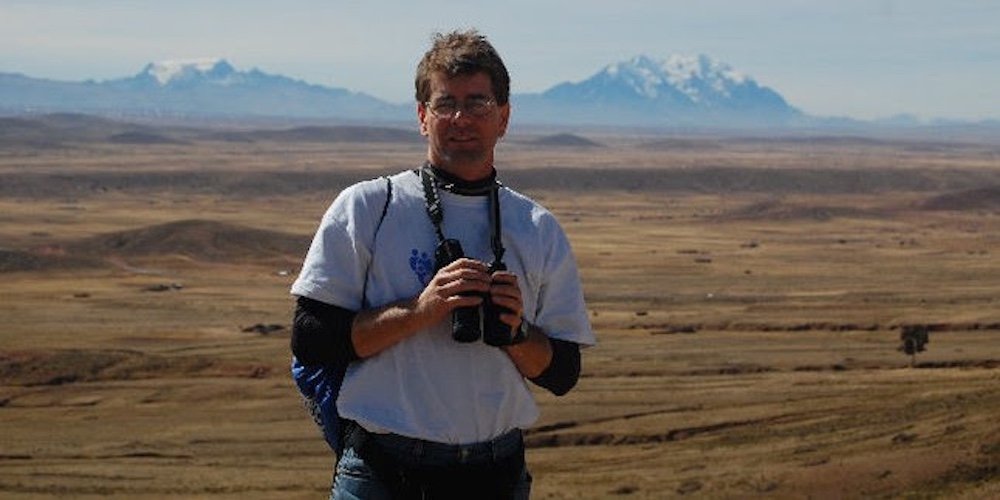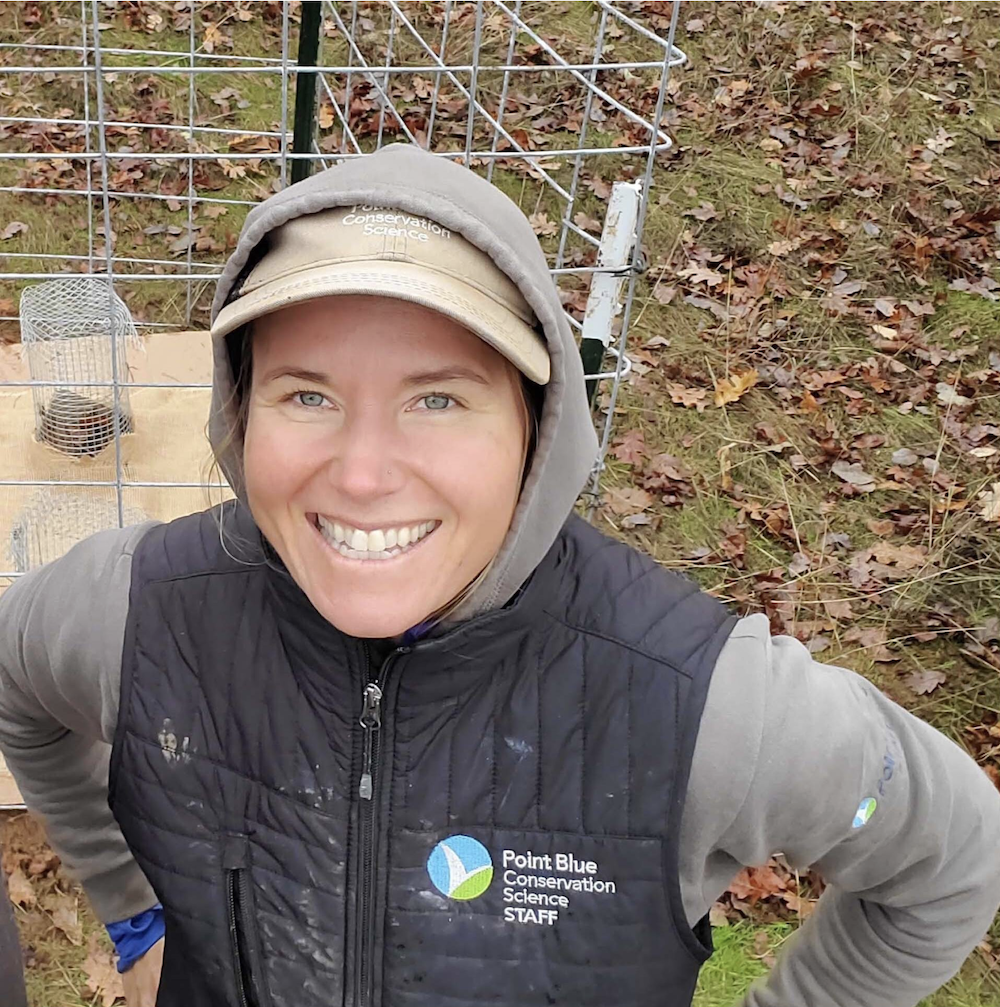
Come join us for our next Chapter meeting—Thursday, February 20, 2025—at which we will be pleased to host Alicia Herrera, ecologist with Point Blue Conservation Science, who will give us a presentation entitled, Conserving blue oaks in the face of drought and climate change.
Climate change and drought have caused substantial recent mortality of the endemic California blue oak (Quercus douglasii). Much of this dieback is concentrated in the species’ southern xeric range edge within the San Joaquin Valley. Losing populations from the xeric “trailing” edge of the blue oak range threatens the genetic diversity of the species and its climate adaptation potential. Because acorns cannot tolerate conventional seed bank storage, we evaluated a novel approach to conserve drought-adapted blue oak genotypes through field gene banking, in partnership with working ranches. At northern California sites, we paired plantings of local blue oak acorns with acorns collected from drought-tolerant blue oaks in the San Joaquin Valley and then evaluated their viability and health. While moving and planting seeds from different genotypes is a new, relatively interventionist strategy, the risk of losing narrow-ranged, endemic oaks in a changing climate is high. The dispersed field gene bank maintains options as transplants can be removed before reproductive maturity if needed, and trailing-edge genetic resources will be preserved in multiple locations even as they are lost from their original populations.
As an ecologist with Point Blue Conservation Science, Alicia Herrera serves as a Program Coordinator and Senior Partner Biologist for the Working Lands Group. For the past 14 years, Alicia has helped advance the conservation of California rangelands and agricultural lands. Working with ranchers, researchers, and conservation partners, Alicia is part of a team of ecologists that collects and uses standardized data on soils, vegetation, and birds to recommend conservation actions that enhance rangeland function for people and wildlife. In partnership with USDA’s Natural Resource Conservation Service, and through Point Blue’s own Roots Program, recommendations lead to on-the-ground implementation of conservation practices and management strategies aimed at benefiting fish and wildlife habitat and ecosystem function.
Alicia lives in Redding and primarily focuses her work within Shasta County. She serves on the Shasta Land Trust Board of Directors, is an excellent birder, and a self-proclaimed plant geek.
Please join us for what promises to be a fascinating presentation! That’s 5:30 or 6 PM on Thursday, February 20, 2025. Venue and time details are below. See you there! ~Shasta Chapter CNPS
The new meeting venue
With sincere gratitude to McConnell Arboretum & Botanical Gardens, we are delighted to announce that Shasta Chapter CNPS is now meeting in the brand new Turtle Bay Nursery Classroom, 1125 Arboretum Drive, Redding. There is lots of free, paved parking just steps away from the classroom building, and nice, curbed sidewalks. To get to the new venue, from South Market Street, turn east onto Arboretum Drive. Veer right at the first opportunity (so you don’t end up at Turtle Bay Elementary School!), and drive a short way to the “curvy” parking lot to the east of Arboretum Drive.
We will get the show on the road a little earlier than in the past. Please be ready to go no later than 6 PM for our short Chapter meeting and announcements, followed by our speaker’s presentation. Or come as early as 5:30 PM to socialize and see what sort of pre-meeting activity or display we might have for you!