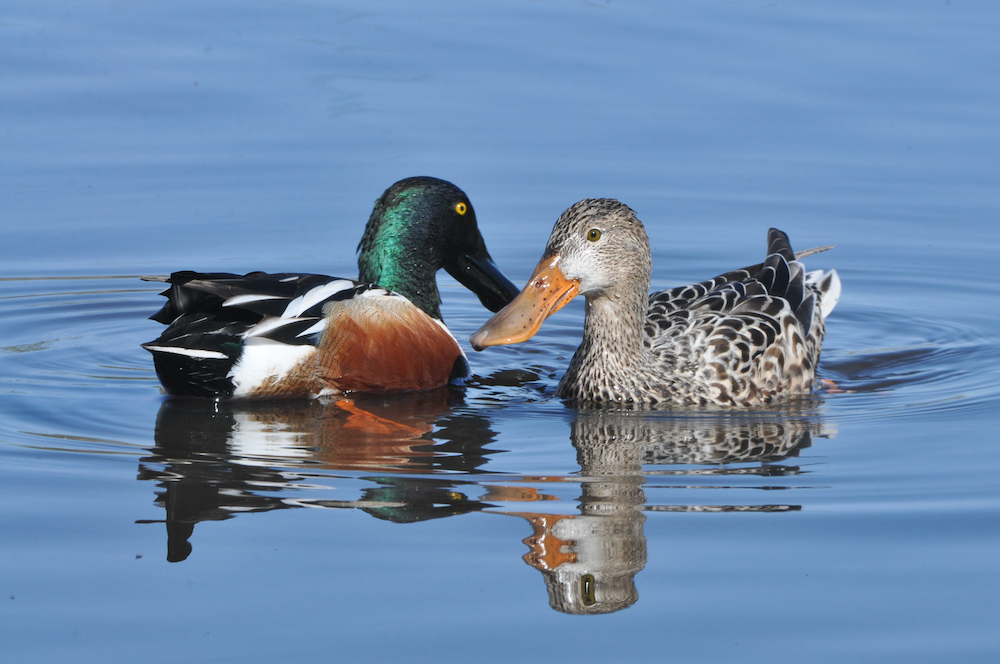
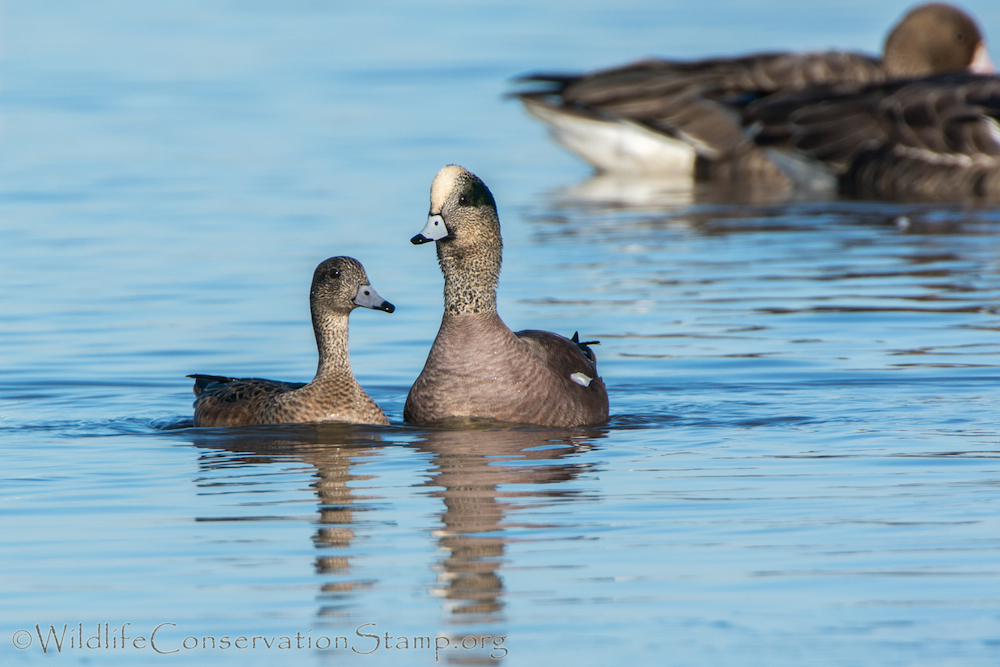
Join trip leader David Garza for a half day trip to two under-visited locations located a short 1.5-mile drive south of Shingletown. Grace and Nora Lakes are owned and managed by PG&E and access is allowed for recreational use. The water levels are low lately, but we anticipate some waterfowl, forest passerines and woodpeckers around the lakes in the immediate vicinity. The terrain is flat and the hiking is easy. Meet at the gravel parking lot on the west side of Park Maina Drive/Kutras Lake at 8:00 am to carpool/caravan or meet at Grace Lake at 9:00am. You can reach Grace Lake by taking Wilson Hill Road south from Shingletown for approximately 0.9 miles, then turning east on Manton-Ponderosa Way (gravel surfaced) for 2/3 of a mile to Grace Lake. We will hike to Nora Lake and environs from there. Map: https://rb.gy/cm9dl
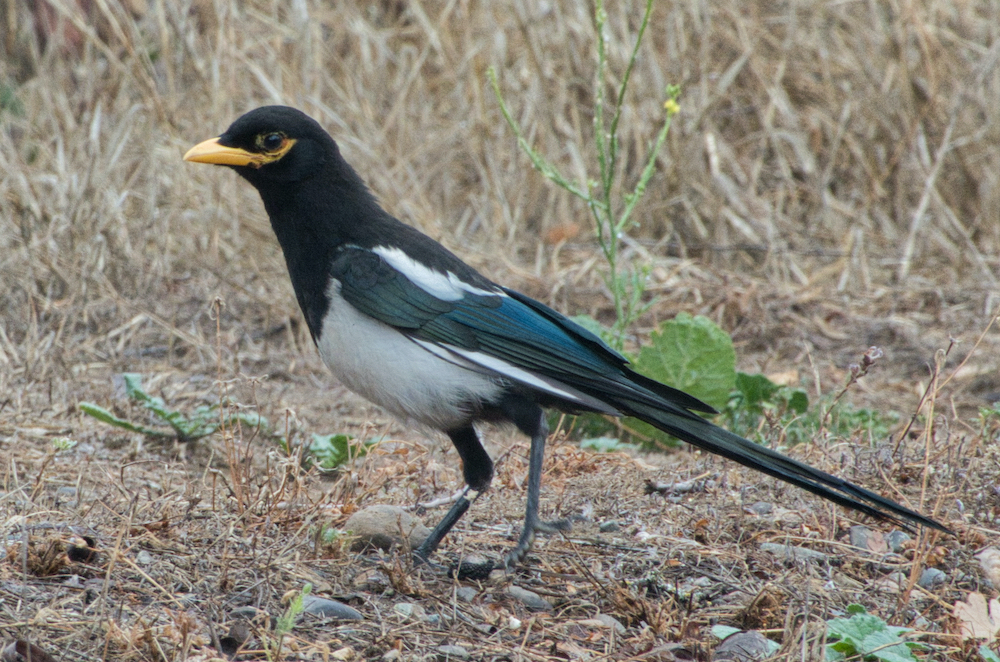
Please join us on a journey with many trails at this very diverse public land with no fees. Sacramento River bisects 488 acres, at this Recreation Area of riparian forest, flowering grasslands, wetlands, and oak woodlands providing very diverse nature viewing experiences. This location is Tehama Region’s number one eBird’s hotspot. This is great home for many varieties of Sparrows, Warblers, Wrens, Woodpeckers, Waterfowl, Wading Birds, and Shorebirds. Yellow-billed Magpies and Phainopeplas are often found here year-round. Saturday, September 30, 2023, at 7:30am. We will meet at the parking lot south end of Sale Lane at the Sacramento River Discovery Center
This is a no fee area and a very active hotspot this time of the year, especially with all the recent weather events we have had in 2023 so far. We are planning to meet at the Bass Pond Parking Lot at, 22459 Bend Ferry Rd, Red Bluff, CA 96080, at the main entrances to the Wetlands.
This half-day event should yield many varieties of waterbirds, raptors, woodpeckers, and many songbirds in this unique and open wetlands area. From the parking lot we will start with a walk on a two-mile loop through several ponds to the south side of the road. If time permits, we will take a short drive to Payne’s Creek Crossing to round out our journey.
Please contact DanBye, by text/cell 530 228 9373 or email danbye56@gmail.com for more information.
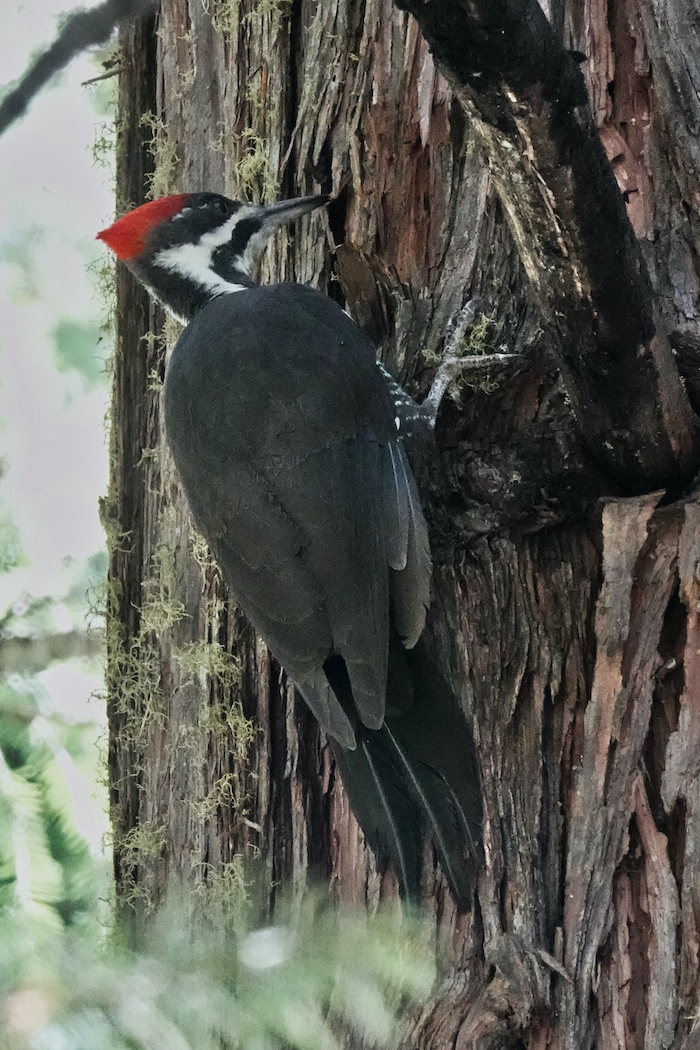
Santa Claus isn’t the only one in a pointy red cap who flies around in winter handing out presents. Pileated woodpeckers do, too. As a matter of fact, they fly year round, delivering gifts through large swaths of North American forests, mostly south of the reindeer.
Pileated woodpeckers thrive among big trees. They prosper in west coast conifers and arc across Canada into deciduous forests throughout the eastern US. Among the big trees, they build and deliver their gifts as only these largest woodpeckers in North America can.
Their gifts are staples of life–food and shelter. Their tools for delivering them are those of carpentry, or maybe jack-hammering–tools of woodpeckers generally, but writ large in these crow-sized birds.
First they need a firm foundation for their hammering. The three toes forward and one back that most birds have would be comparatively unstable. Woodpeckers instead have on each foot two toes forward and two back. This allows a solid grip at the variety of angles at which woodpeckers work.
Further, woodpeckers have stiff tails that function with their feet to create a sturdy tripod from which to work.
Well anchored, woodpeckers still need a stout, strong bill to pound and pry. These birds regularly punch wood at about fifteen miles per hour. With what are probably the continent’s most heavy-duty natural chisels, pileated woodpeckers excavate gaping holes in dead trees. However, the abrupt deceleration of smacking their heads into solid wood creates impacts up to fifteen times what humans can sustain–impacts that would shut down the NFL with concussion injuries. All their concussive pounding requires some protection for these bird brains. Fortunately, they have it.
Human hyoid bones, which anchor our tongues, are firmly based at the top of our throats. Woodpecker hyoid bones are anchored at the base of their upper bill and flex in two bands over and around the brain before curving up under it to root the tongue. This limber anatomy creates extra elastic length for the tongue, allowing woodpeckers to probe deeply after insects in their excavations. It also lets the hyoid bone act as a sort of seat belt around the brain, tightening against destructive sloshing inside the skull.
The hyoid can’t reduce the pounding to zero, however, and woodpeckers have another brain-protecting design. Their brains are oriented more vertically than ours. That spreads out the force of frontal impact over a larger area of the brain, effectively dissipating the blow of each whomp on wood.
With these tools for effective and sustainable wood-carving, the woodpeckers can make their gifts–presents not wrapped up with a bow but offering vitals to their forest neighborhoods.
The large, often rectangular feeding holes that pileated woodpeckers create expose their prime food, carpenter ants, to not just themselves but to wrens and other birds, too, a feast any time of year.
And their nesting cavities? The excavations of smaller woodpeckers often end up as homes for smaller birds–swallows, titmice, nuthatches, chickadees, bluebirds, etc. But pileated woodpecker cavities are super-sized, and can provide homes for bigger forest and woodland residents: numerous ducks–mergansers, buffleheads, and wood ducks; owls of various kinds; other woodpeckers that are upsizing; and many mammals, including squirrels, flying squirrels, different bat species, pine martens, and raccoons.
The efforts of pileated woodpeckers are a boon to the forests. Each year mated pairs select one of their many holes and there raise their brood of three to five young, ensuring that this avian Santa Claus keeps giving.
It’s election season, and not too big a stretch to see red, white, and blue in some of our feathered aboriginals. Many colorful birds have headed to Mexico for the winter, but northern flickers, after spending summer in cooler areas upslope, along the river, or northward, have returned to our local woodlands.
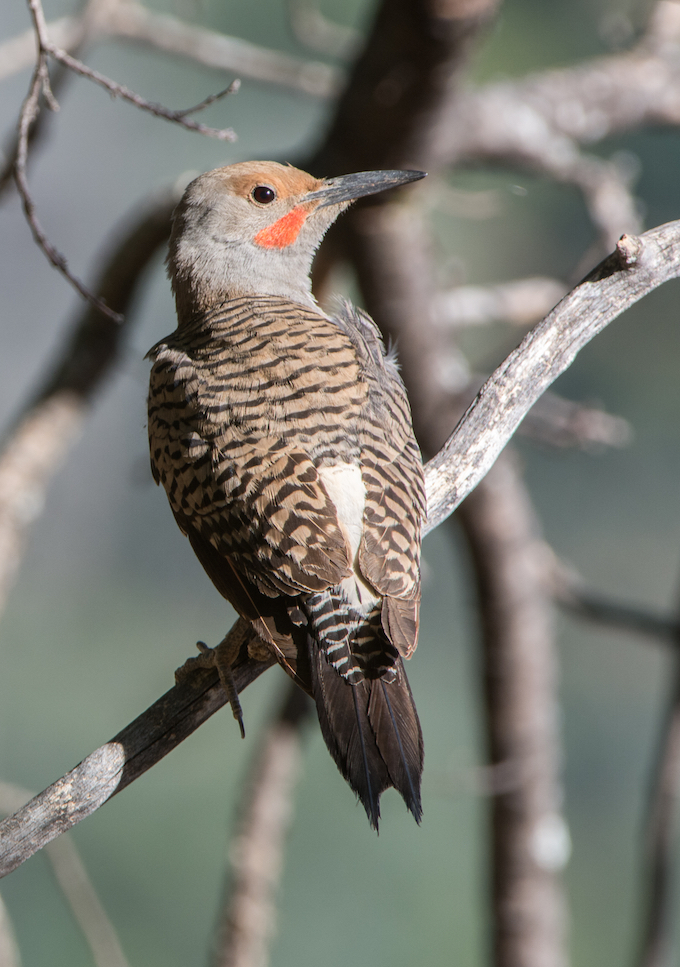
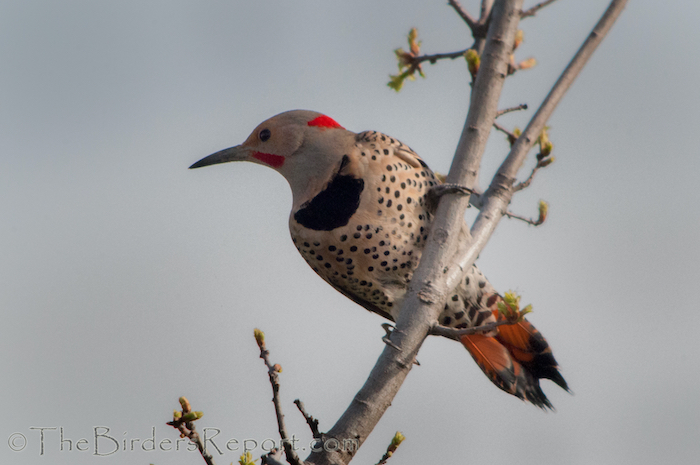
Flickers are woodpeckers, and our western version has bright red under its wings, a bold white rump patch, and, for a willing eye in good light, a steely blue-gray face, offset in the male with a red dash of a whisker.
Northern Flicker Male Intergrade
The eastern version of the flicker shuffles some of these colors around, and substantially substitutes yellow for our western red. But yellow or red, both flickers sport a beautiful black necklace, speckled breast and belly, and a list of beneficial behaviors.
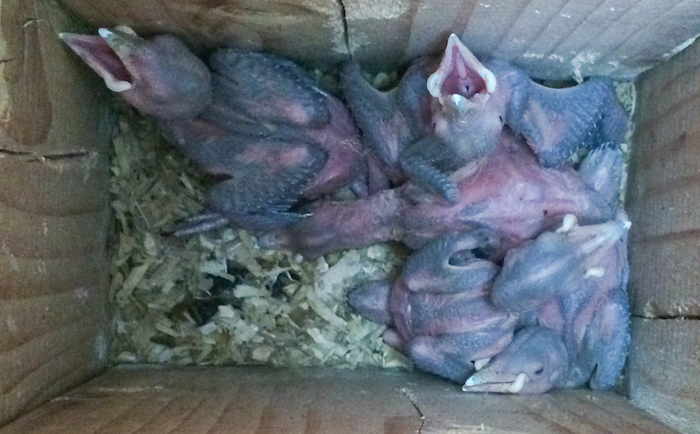
Northern Flicker Nestlings
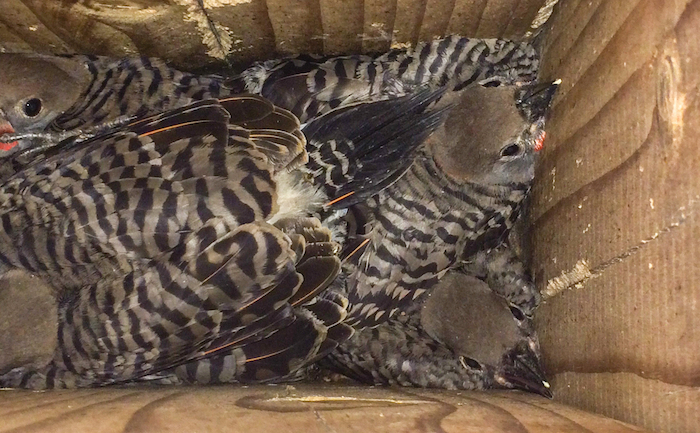
They act as partners: mated pairs share the work and, we can hope, pleasures of nest construction, egg incubation, and child-rearing.
Northern Flicker Nestlings
They get along with their neighbors. Small groups routinely stick together, flocking severally through the woods. Where red- and yellow-shafted flickers meet, they associate impartially.
They communicate with one another, singing a one-pitch staccato trill to call far and wide, or drumming on hollow wood in various cadences, or murmuring to closer birds with a silky weeka-weeka-weeka call.
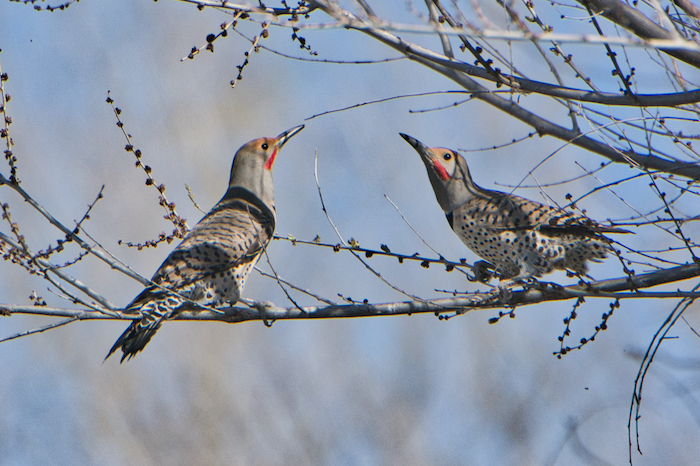
Of course flickers are not immune to conflict, particularly in finding mates. But they have evolved a ritualized solution to their disputes. As in some other species, rivals face each other, bills to the sky, and they bob and weave together, perhaps calling out, until one seems to decide the other has rights and flies off with no harm done.
Northern Flicker Males In Conflict
Flickers interact thriftily with other species. Before eating ants, they may rub them over their bodies, or simply allow the ants to crawl over them. It is hypothesized that the ants’ formic acid helps protect the birds from mites and lice, and preening with them may improve the ants’ palatability by reducing their remaining acid content.
They provide for other species, however naively. Many kinds of birds nest in woodpecker cavities, but flickers, because of their large size, are crucial to other large cavity nesters. Buffleheads, the most common black and white duck you’ll see on the river in winter, rely almost exclusively on flickers for nesting cavities.
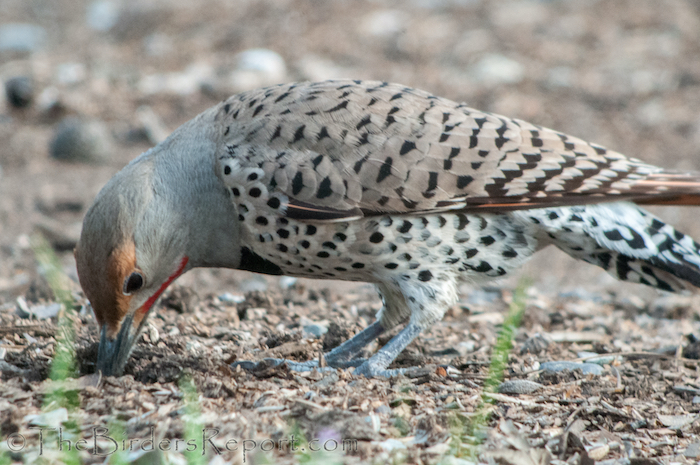
And flickers live close to the earth. They chisel at bark like other woodpeckers, but most of their foraging is actually done on the ground, where they lap up ants and other insects, as well as fruits and seeds.
Northern Flicker Male Anting
They are so comfortable with the dirt that even in nesting they will sometimes forgo a tree cavity to raise their young in a hole in the ground–say, an old kingfisher or bank swallow tunnel.
So flickers act as good partners, neighbors, and members of their larger communities and environments–making them quite patriotic, I think, even if they have no notions of that idea. The added power of voting is just our own.