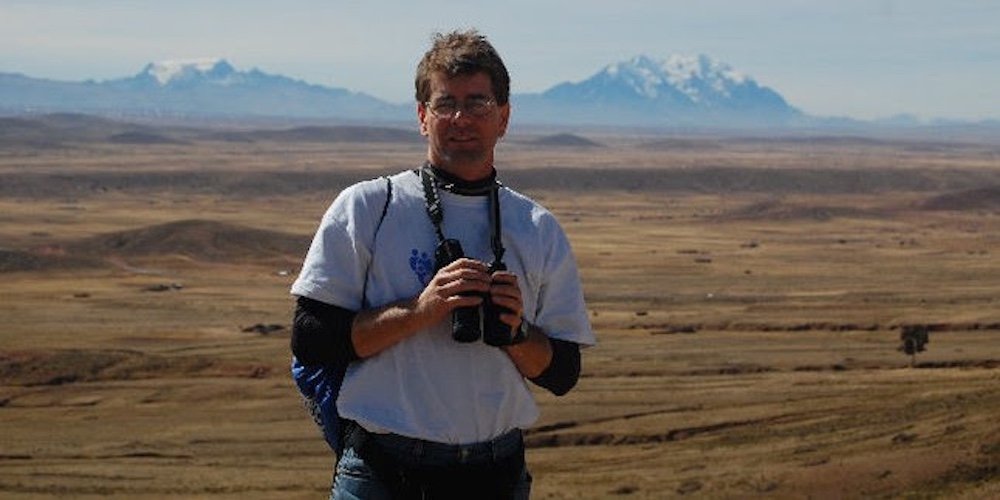
Morgan Tingley, Professor of Ecology and Evolutionary Biology and the Institute of the Environment and Sustainability at UCLA
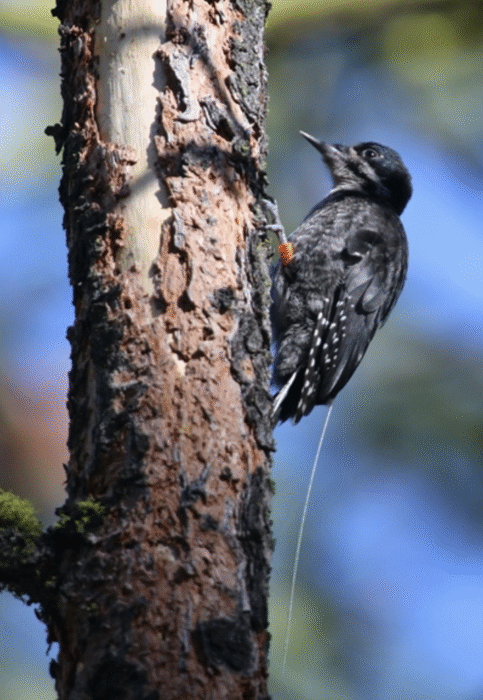
Fire is a critical and natural part of many ecosystems, but the nature of fire is rapidly shifting due to climate change. From a biological perspective, fire is a regular disturbance that affects the distribution and abundance of species and has shaped evolution for millions of years. Nevertheless, we are entering an unprecedented period where the dominant nature of fire is rapidly changing, disrupting both human and animal lives.
In this lecture, Dr. Morgan Tingley will discuss the myriad ways that fire has shaped the ecology of birds and how the shifting nature of fire is impacting biodiversity. By learning how species are currently responding to a rapidly changing world, we are offered a glimpse into what our increasingly flammable future will hold.
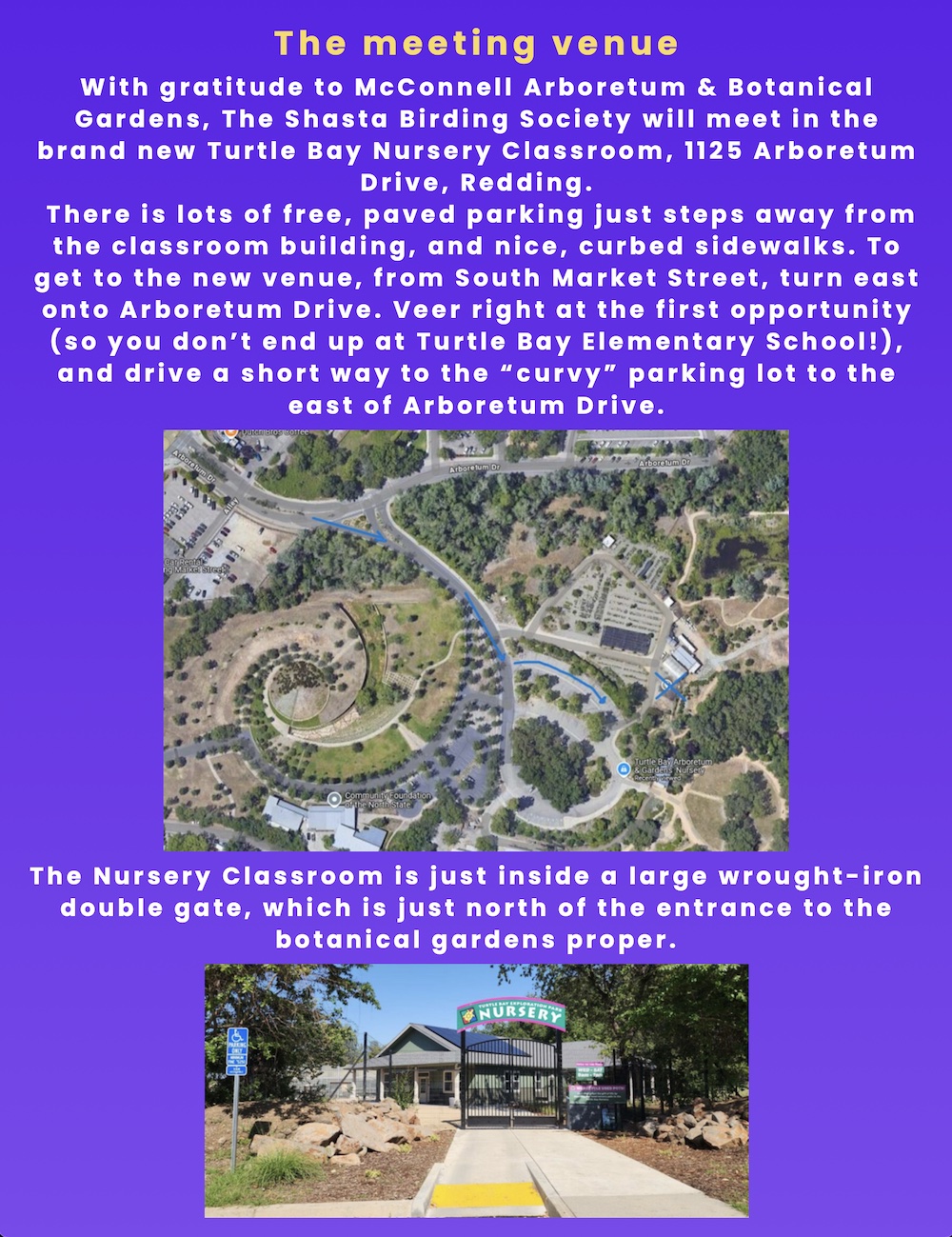
Shasta Birding Society is inviting you to a scheduled Hybrid Zoom meeting. If you can, please join us in person for our first presentation of the season at the Turtle Bay Nursery Classroom!
Topic: Join us on October 8th for an evening with Morgan Tingley Time: Oct 8, 2025 07:00 PM Pacific Time (US and Canada) Join Zoom Meeting https://us06web.zoom.us/j/84094670374
Meeting ID: 840 9467 0374
—One tap mobile +16694449171,,84094670374# US +16699006833,,84094670374# US (San Jose)
Join us on Zoom for Steve Hampton’s timely presentation about birds and climate change: the changes that are already happening, with a special focus on Northern California.
Birds are responding to climate change, and have been since the mid-1980s. It has only become clear recently. What started as a little bump in the data is now clearly the start of a massive exponential curve. Lesser Goldfinches and California Scrub-jays, among many others, are invading the Pacific Northwest. Anna’s Hummingbirds are over-wintering in Alaska. All booby species have been removed from California’s review list. And Western Tanagers are now regular in winter in increasing numbers. At the same time, Wrentits and Oak Titmice are going nowhere. The world of Ivory Gulls and Black Guillemots is melting. Birds are evacuating from the Mojave Desert and literally shrinking, physically, from the Amazon to North America to the Middle East.
The world is changing so fast, and birds with it, that papers are outdated by the time they are published. But the main themes are the same:
Many birds are responding quickly to rapid climate change.
Some are not.
Birds, as a kingdom, like warm weather, and did very well during the last major global warming event 55 million years ago.
At the species level, there will be winners and losers.
Steve Hampton has been birding since he was 7 years old. He lived in Davis for 30 years and worked for California Dept of Fish and Wildlife much of that time, where he was involved in oil spill response, natural resource damage assessment, seabird restoration, and partnerships with Native communities. He writes regularly for Birding magazine, recently served on the American Ornithological Society’s Ad-hoc Committee on English Bird Names, and currently resides in Port Townsend, where he serves as the conservation chair and CBC compiler for Rainshadow Bird Alliance. He combines his love of birds with a PhD in resource economics to analyze bird data. His article in the December 2022 issue of Birding summarized the recent research on birds and climate change. He will present that information, with a special focus on Northern California.
Audubon launched its Conservation Ranching program (ACR) here in California in 2019. Matt Allshouse of Audubon California will present this program which is designed to stem the conversion of grassland ecosystems and improve the ecological functions of rangelands by partnering with ranchers to transition to more regenerative grazing approaches via a ranch certification program. This presentation will highlight the ACR program components which includes the development of ranch-specific Habitat Management Plans and a third-party certified set of regenerative grazing practices to increase climate-driven drought resiliency, rebuild soil organic matter, enhance plant diversity and cover, increase water infiltration and carbon sequestration, and increase overall biodiversity.
Shasta Birding Society is inviting you to a scheduled Zoom meeting.
Topic: Audubon Conservation Ranching Program
Time: Feb 14, 2024 07:00 PM Pacific Time (US and Canada)
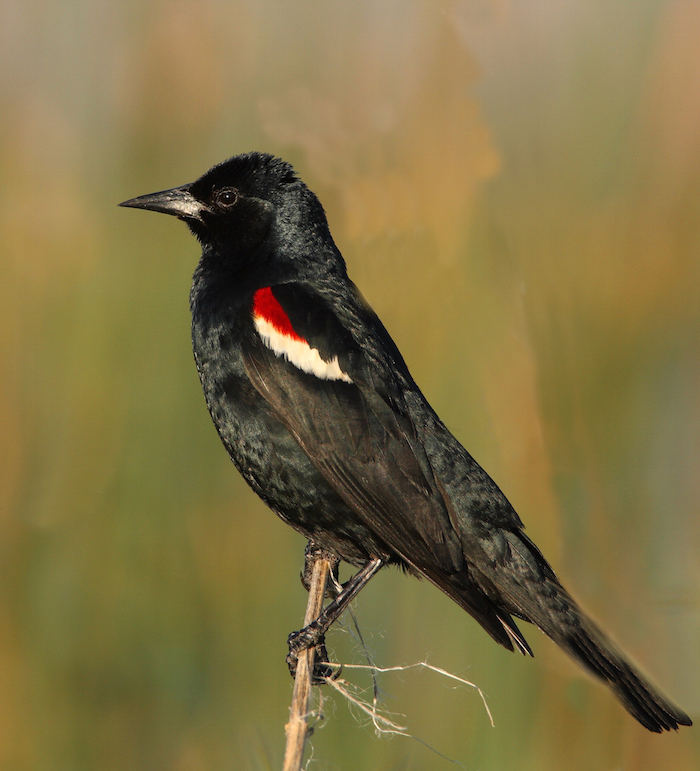
This month Dan Airola will provide recent status information on the Tricolored Blackbird and Yellow-billed Magpie, two Central Valley species that have declined substantially in recent years. Blackbird population loss has resulted from habitat loss, nest destruction during agricultural harvest, and loss of insect prey due to insecticide use. The successful proposal to list the species under the state Endangered Species Act sparked research and conservation programs. Dan recounts this recent history and the successful efforts that have resulted in modest but important population increase. The population of the state-endemic Yellow-billed Magpie declined by over 80% in California since the arrival of West Nile virus in the early 2000’s, and did not develop resistance, unlike some other species. Dan’s recent studies reveal key habitat relationships and an apparent incipient recovery in the sizable urban Sacramento population.
Dan Airola is a Wildlife Biologist and Ornithologist who has worked for over 40 years in research and conservation of at-risk species birds in Northern California. In addition to long-term research on the tricolor and magpie, Dan maintains a 30-year study of Sacramento’s Purple Martins and has also studied Swainson’s Hawks, Turkey Vultures, Osprey, fire-adapted forest species, migrant songbirds, and diving ducks. Dan also serves the Central Valley Bird Club as a Director, Conservation Chair, and editor of the journal Central Valley Birds.
Wintu Audubon Society is inviting you to a scheduled Zoom meeting.
Topic: Status of the Tricolored Blackbird and Yellow-billed Magpie
Time: Nov 8, 2023 07:00 PM Pacific Time (US and Canada)
Meeting ID: 849 3595 9479
—
One tap mobile
+12532158782,,84935959479# US (Tacoma)
+12532050468,,84935959479# US
—
Dial by your location
• +1 253 215 8782 US (Tacoma)
• +1 253 205 0468 US
• +1 669 444 9171 US
• +1 669 900 6833 US (San Jose)
• +1 719 359 4580 US
• +1 346 248 7799 US (Houston)
• +1 312 626 6799 US (Chicago)
• +1 360 209 5623 US
• +1 386 347 5053 US
• +1 507 473 4847 US
• +1 564 217 2000 US
• +1 646 931 3860 US
• +1 689 278 1000 US
• +1 929 205 6099 US (New York)
• +1 301 715 8592 US (Washington DC)
• +1 305 224 1968 US
• +1 309 205 3325 US
Please join our webmaster as he highlights some of his favorite bird photos from the last fifteen years. Don’t be surprised if there may be a few short videos as well. This is the second part of his presentation.