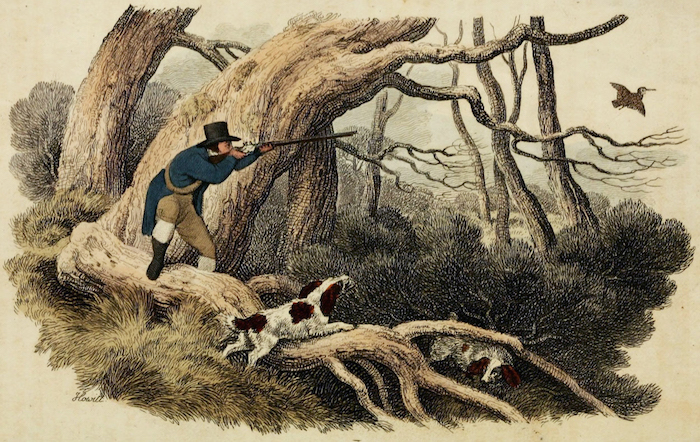
Up through the 19th century many folks in this country celebrated the Christmas season in “side hunts” in which they competed at how many birds they could kill, regardless of whether they had any use for the carcasses and of whether the birds were beneficial, beautiful, or rare. Ornithologists and bird watchers were appalled at the slaughter. In December 1900, Frank Chapman an early officer in the nascent Audubon Society proposed a new holiday tradition—a “Christmas Bird Census” that would count birds during the holidays rather than hunt them. On Christmas Day of that year 27 birders took part in 25 places in the United States and Canada. Since then participation has grown every year, now exceeding 80,000 people in 2,400 locations in 17 countries.
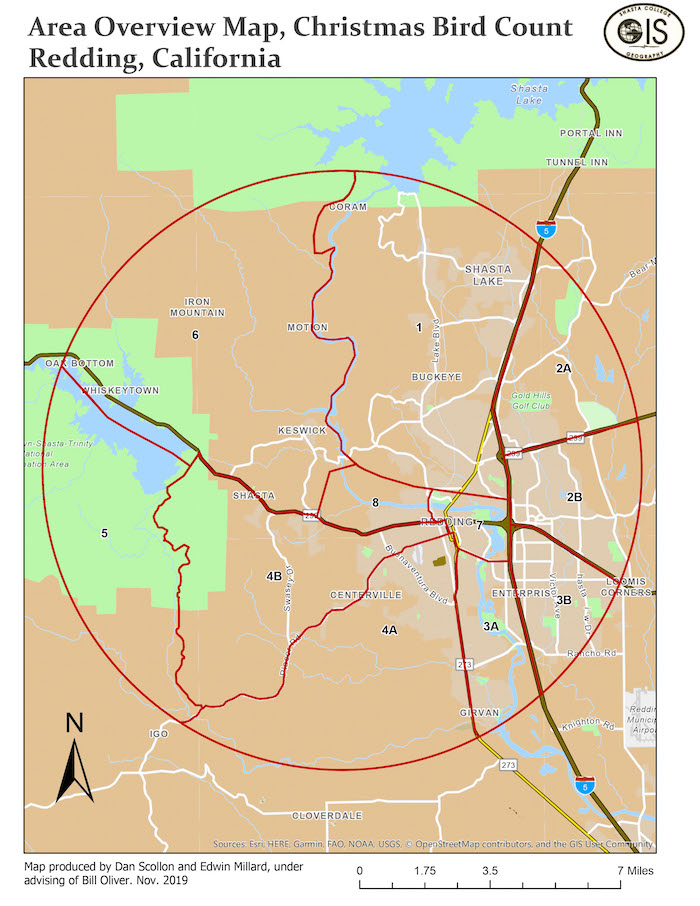
Shasta County participation, conducted by the Lassen Bird Club, began briefly in the late 1950’s but ended when the club folded in 1967. The first project of the newly formed Wintu Chapter of the National Audubon Society was the Christmas Bird Count in 1975. It was soon followed by a Count in Fall River Valley, Red Bluff and more recently Anderson. All Counts follow a standard protocol. The count is performed any day from December 14 to January 5 within “a count circle” with a diameter of 15 miles. The Redding Count is centered just north of Keswick Dam and extends north to Shasta Dam, south to Clear Creek, west to Oak Bottom Marina on Whiskeytown Lake, and east to Shasta College. It is designed to include a variety of habitats, open water, valley grasslands, oak woodlands, brush lands and conifer forest–and, of course, an increasing portion of urban and suburban habitat. The circle is divided into 10 sectors with a team leader assigned to each sector. Teams count from dawn to dusk rain or shine every bird they see by species. Participation is open to all and is free of charge. At the end of the day participants gather at a local restaurant for a no-host dinner and a compilation of the results. Learning the surprise findings of other teams is fun and emphasizes the old adage that “birds are where you find them” not always where you expect them.
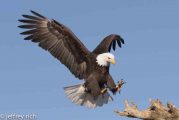
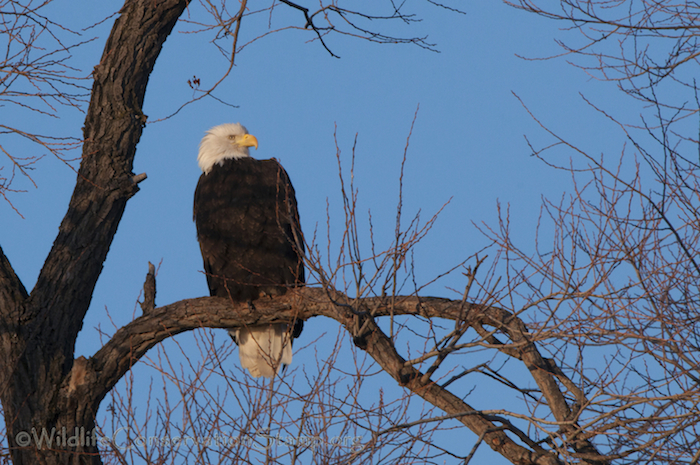
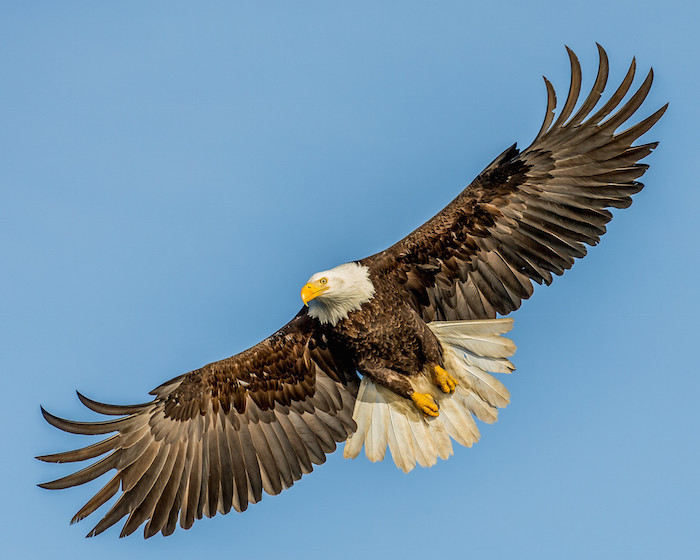
The results are by no means as accurate as a human census. The experience of the birders, the weather, and the changing quality of locations examined, all influence both species identification and number of individuals. Not all of the area in the count circle is covered, and not every bird along the route is seen or identified. Big flocks can’t be counted precisely. Also, telling whether a bird has been counted twice can be difficult. A Bald Eagle in flight over the count circle may be counted by several teams, whereas only a fraction of the White-crowned Sparrows in the roadside bushes might be counted. The strength of the results lies in the long-term trends in species numbers, recognizing that the habits of birds and people remain the only constant.
Our results are sent to the National Audubon Society that along with other organizations uses data collected in this long-running wildlife census to assess the health of bird populations, and to help guide conservation action. For example, the Environmental Protection Agency (EPA) has included Audubon’s climate change work from CBC data as one of 26 indicators of climate change in their 2012 report.
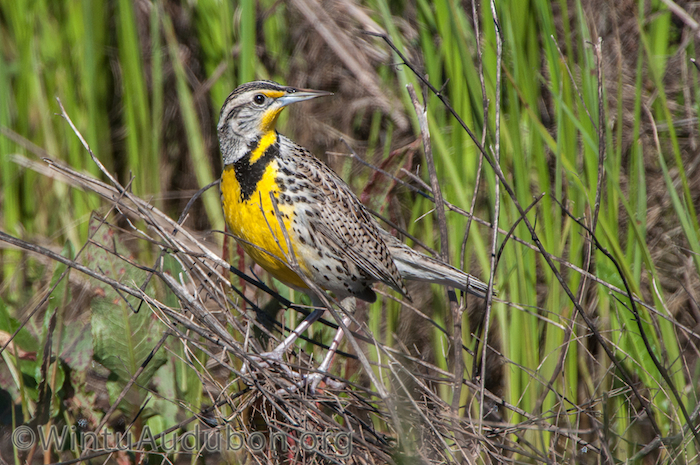
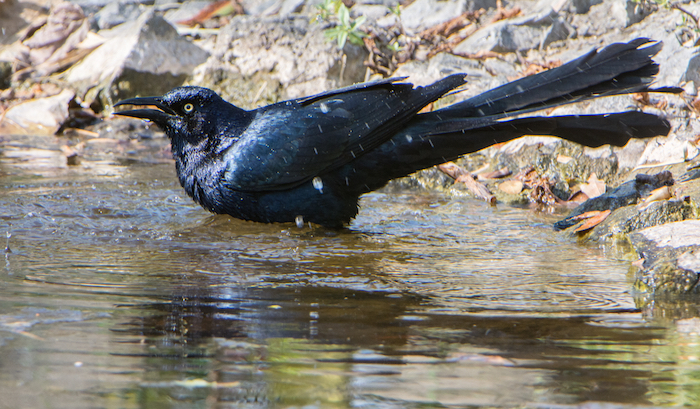
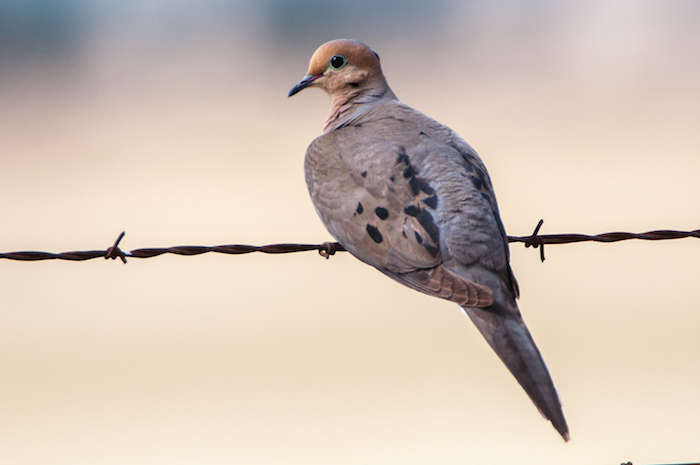
Now with 45 years of Christmas Bird Counts here in central Shasta County several clear trends are apparent. As expected, urban development within the count circle has reduced the habitat available for Western Meadowlarks and California Thrashers. The range expansion of Great-tailed Grackles, originating from the southeastern U.S., reached the Redding Area in 2010 and now has several established sites at Lema Ranch and the Clover Creek Preserve. The Common Raven has made a strong move into the valley and downtown Redding beginning in 2007. You can now see them on light poles along busy streets. The Red-shouldered Hawk habitat in central Shasta County historically was confined to riparian vegetation along the Sacramento River. Since 1997 it has expanded its range and can be found on farms and rural subdivisions throughout the valley. Perhaps most spectacularly, the Eurasian Collared-dove arrived in the Redding area in 2008 and is now well-established at about 60 individuals throughout Redding neighborhoods. You are probably aware of its tiresome hooting, a pushier sound than the coo of our native Mourning Doves.
These are just some of the trends the Redding Christmas Bird Count has documented.